

You know the story; in 1993, a skinny Brazilian in a kimono bested seven other fighters in a bare knuckle No Holds Barred (NHB) fighting tournament. And then he did it again. Royce Gracie introduced Jiu Jitsu to the public in spectacular fashion as the premiere martial art for one-on-one fighting. His brother Rickson and his cousins Renzo and Ralph had success in other promotions and other Brazilian Jiu Jitsu fighters were cleaning house across the NHB scene. Jiu Jitsu seemed unstoppable.
Other fighters started to study Jiu Jitsu, if only to defend. Ken Shamrock was able to land an overhand right and take Royce down, neutralising his guard and staying safe. Kickboxer Maurice Smith knocked out Jiu Jitsu black belt Marcus 'Conan' Silveira with a head kick. Kazushi Sakuraba defeated numerous Jiu Jitsu players in the late 90s and went on to be known as The Gracie Hunter for his victories over Royler, Royce, Renzo and Ryan Gracie.
The sport became legitimised as Mixed Martial Arts (MMA) with the addition of rules, some of which hindered the pure Jiu Jitsu athletes, such as time limits and clothing regulations. The use of a kimono was prohibited, gloves made it more difficult to secure grips and submissions, and fights were halted to restart the action standing if the crowd booed hard enough.
At the same time, the sport of Jiu Jitsu exploded, with Carlos Gracie Jr founding the International Brazilian Jiu-Jitsu Federation (IBJJF) to regulate the sport. The rules distinctly separated Jiu Jitsu from NHB/MMA, with the kimono heavily emphasised and strict rules to manage safety. Today, Jiu Jitsu is a popular martial art for men, women and children of all ages and ability, in stark contrast to MMA, which is often seen to be more aggressive and violent.
It is therefore reasonable to question the relevance of Jiu Jitsu in the modern era of MMA. Should MMA athletes attend the local Jiu Jitsu club, put on a kimono and start doing shrimps and breakfalls? Is No-Gi any better, with inversions and leg entanglements? Jiu Jitsu specialists such as Demian Maia, Charles Oliveira and Ryan Hall have been successful in modern MMA but they are not the typical archetype for the sport. Indeed, most modern fighters have good wrestling, heavy hands and excellent physical conditioning. It certainly seems that to be a competent MMA competitor, Jiu Jitsu is not strictly necessary.
However, if we replace Jiu Jitsu in our analysis with submission grappling in general, and if we look at legends of the sport, we start to see more prevalence. Elite fighters Fedor Emelianenko, Georges St-Pierre, Kazushi Sakuraba, BJ Penn, Demetrious Johnson and Khabib Nurmagomedov were all fantastic submission grapplers. St-Pierre did not have a grappling background but he passed the guards of Matt Serra and BJ Penn. It is worth noting, though, that all of these fighters had excellent wrestling and/or judo.
Even fighters with renowned striking skills, such as Anderson Silva and Wanderlei Silva, had Jiu Jitsu black belts. K1 fighter Mirko “Cro Cop” Filipović submitted Kevin Randleman with a guillotine choke. For strikers without a wrestling background, it appears that ground skills are crucial to reach the top levels in the sport.
Jiu Jitsu teaches control of an opponent when on top, escapes and reversals when on bottom, sweeps from guard and, of course, submissions. These are all valuable skills to an MMA fighter and are still seen at the highest levels of the sport today. If a fighter is weaker on the ground against a Jiu Jitsu specialist, it is a clear disadvantage, as with any other aspect of the sport. As noted though, Jiu Jitsu in and of itself is not enough and must be paired with the ability to fight on the feet, whether that be striking, takedowns or a combination of both.
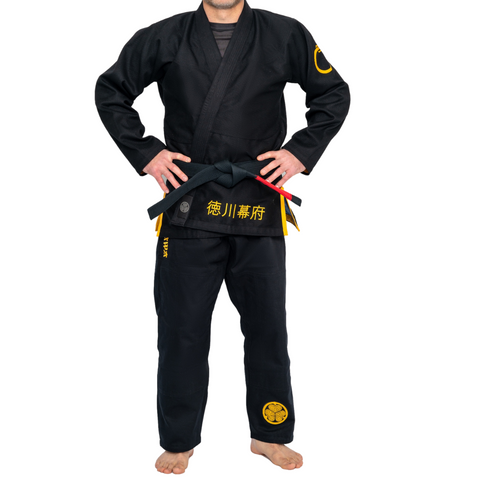
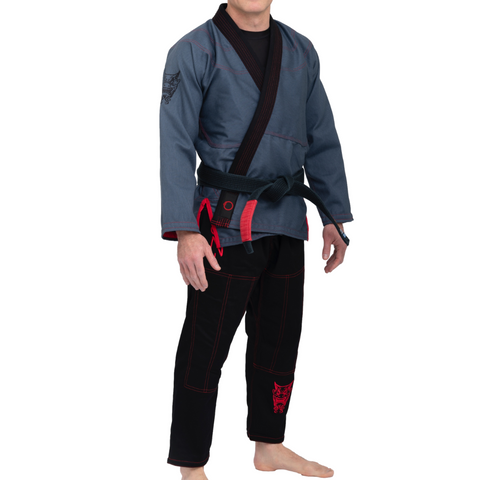
Jiu Jitsu for MMA doesn’t require you to know the latest lapel-based guard named after your favourite sea animal but the core principles of Jiu Jitsu are valuable additions to your MMA skillset; posture, top pressure, base, off balancing, control, strangulation, etc. will all serve you well. Whilst the majority of your Jiu Jitsu should be trained to somewhat mimic MMA, don’t throw the baby out with the bathwater. It might sound somewhat controversial but training in a kimono isn’t a bad idea, even for MMA. There are a number of benefits to training in the kimono; it can be a useful tool for beginners to start grappling as it provides ready-made grips, like training wheels. I’m also personally a big believer that training both with and without the kimono helps each other, in that if you can hold someone down without the kimono, it is much easier to do so when the extra grips are present. Conversely, if you can escape whilst being pinned by your clothing, it becomes easier without it.
That said, as previously noted, the majority of Jiu Jitsu training for MMA should resemble MMA. Most of the time you won’t wear a kimono, you should train in MMA gloves, and some indication of striking danger should be present to keep the training relevant, such as light shots when applicable.
On the flip side, one aspect where I feel Jiu Jitsu is lacking is professionalism. Many competitors don’t have a competition strategy, they have little idea of nutrition, strength and conditioning and weight management, and they don’t understand periodisation. That’s to be expected of a recreational hobby where everyone has a family and a day job but it won’t cut it in MMA. Your MMA opponent wants to beat you into submission or unconsciousness and you need to be an athlete.
To address the question in the title of this article, whilst not compulsory, submission grappling is absolutely still relevant in MMA and Jiu Jitsu, when trained appropriately, is a great fit for that role. Jiu Jitsu is not, however, enough by itself if you want to compete professionally and should be part of a wider MMA skillset, with a solid strength and conditioning program.
About the author
This article was written by Leigh Remedios, who is a black belt in Brazilian Jiu Jitsu, Judo, Traditional Ju Jitsu and Tae Kwon Do. Leigh is a prolific competitor and has competed internationally in martial arts, including the UFC and Polaris. He has won several prestigious competitions, including the NAGA United Kingdom Grappling Championship belt and European IBJJF no-gi gold medals. Leigh runs a Jiu Jitsu and MMA Academy in Wiltshire, UK.





0 comments